Featured Blog Posts




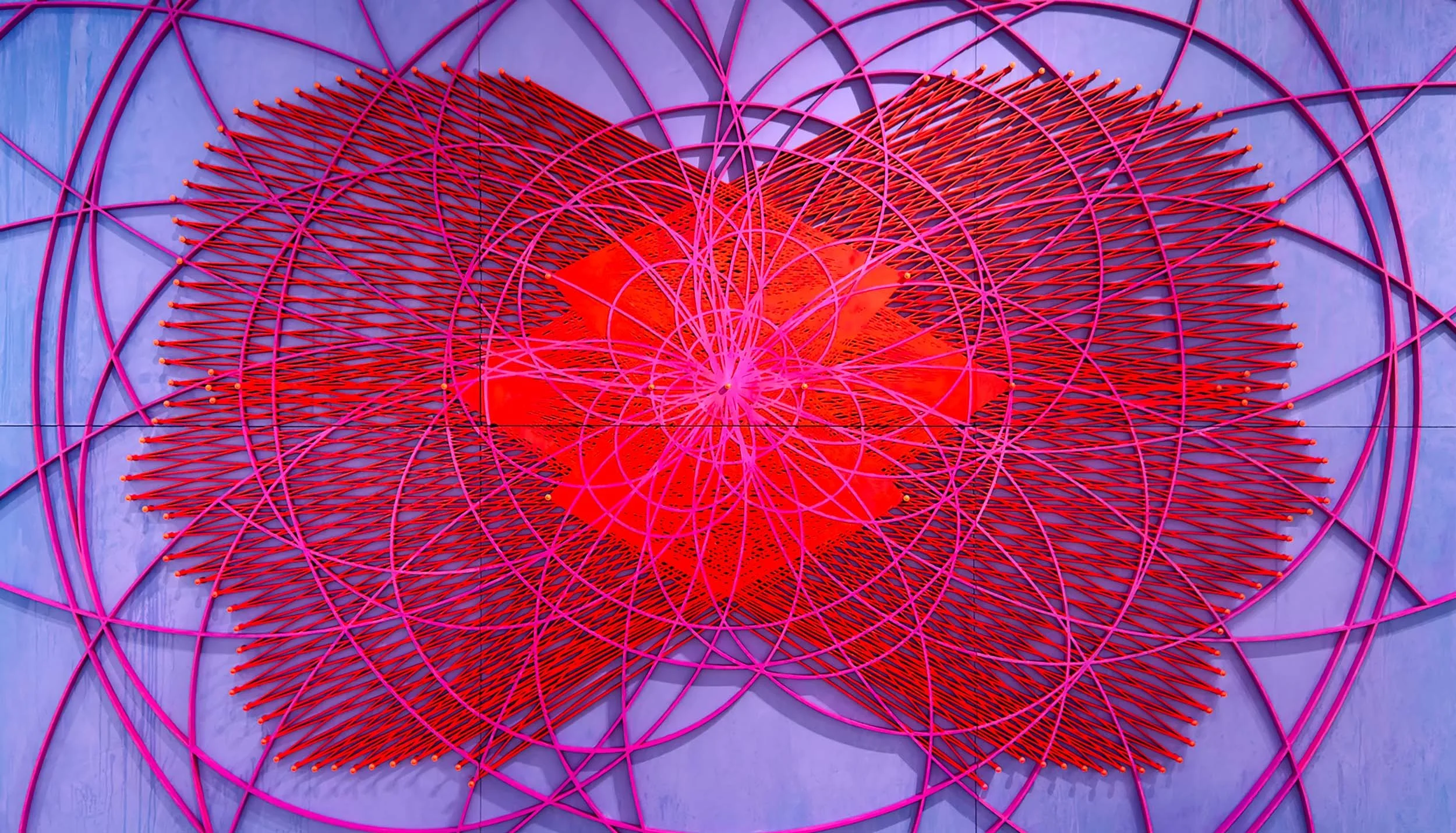
My exhibition, Neurotransmissions, explores a range of concepts related to shifting paradigms in neuroscience, quantum physics, and computer science to tell a story about our contemporary understanding of the human mind.
Viewers will encounters relationships between color theory and the function of neurotransmitters. Figure/ground relationships demonstrate how our brain “fills in” missing information as it makes predictions based upon past experiences. I also examine our anxious relationship with Artificial Intelligence by combining a self portrait in profile with a deconvolutional neural network. This type of neural network emulates a biological brain’s frontal lobe. These works are often steeped in the tradition of abstract painting and color theory, but also explore new territory . . .
This morning I received the these images for my painting installation at the U.S. Embassy in Lima, Peru. The work was selected by our US Ambassador, Stephanie Syptak-Ramnath, through the Art In Embassies program. It is displayed alongside black and white photographs by artist Martín Chambi and sculpture by Juan José Barboza-Gubo. Thank you to Tiffany Williams, Curator for the Art In Embassies program, for including me in the project.
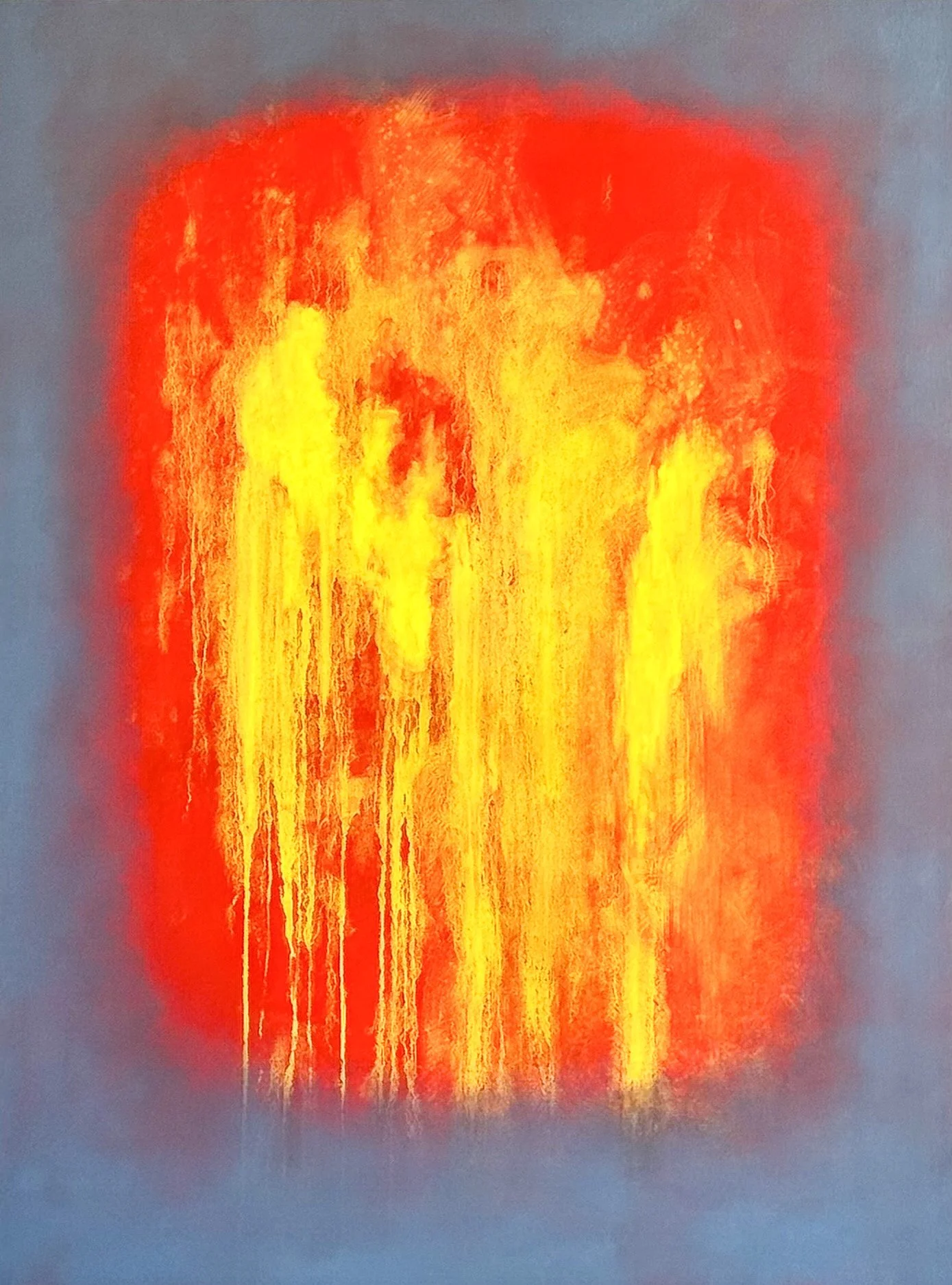
My work Noradrenaline Dilation, oil on canvas, 40 x 30 in, is included in this year’s Baker National. The work is about the chemistry of emotion. It relates color to the role of neurotransmitters that regulate our moods. Here color acts as a metaphor for Noradrenaline which repels a nimbus of gray. Noradrenaline is a transmitter similar to adrenaline that increases levels of alertness, priming us for action. It also increases our blood pressure and widens our air passages . . .
The University of North Carolina Pembroke’s A.D. Gallery is proud to present the 14th Annual International Juried Exhibition. Gains/losses, highs/lows, submerge/emerge…our human experience swings on a pendulum. While we all aim for homeostasis, the moments the pendulum swings are often when we feel the most alive, when we are called to act or react. In the past 20 years, we have faced major political, social, environmental, and personal shifts. These shifts have presented us with obstacles, challenges as well as moments for reinvention and emergence . . .
I’m excited to be participating in this year’s Portrait 2025 exhibition at the CICA Museum in Gyeonggi-do, South Korea. My work Self Portrait with Deconvolutional Neural Network, pigment ink print, 20 × 16 in, was selected for the show. The work comments on our relationship with Artificial Intelligence. It was created by taking photographic self portraits in full profile. Using Adobe Illustrator, I traced these portraits using nodes, transposing the portrait profiles into input cells that link to a Deconvolutional Neural Network, which is a type of network that emulates a biological brain’s frontal lobe . . .
In August 2024 I was invited to participate in the U.S. Department of State Art in Embassies program. My painting Insufficient Capacity was selected by curator Tiffany Williams to be included in an exhibition for Stephanie Syptak-Ramnath, the new Ambassador to Peru. Ambassador Syptak-Ramnath is interested in working with artists who create work that encourages connections and drives conversations. It is an honor to participate in this exhibition. The painting is currently being shipped to Peru . . .
In August, I traveled to Iceland to conduct field research and meet with scientists for my newest project Hydrological Landscapes. It was my first research expedition of this kind and was funded by a Humanities-, Arts-, and Design-Based Disciplines (HAD) research grant from the Oklahoma State University’s Collage of Arts and Sciences, where I’m starting my second year as the Assistant Professor of Studio Art. This funding and opportunity has reshaped my research based art making practice in several ways. It has encouraged a cross-discipline approach, prompting direct dialogue with the scientists and researchers . . .
In this exhibition, Constructed Emotion, I explore a range of concepts related to current viewpoints in neuroscience, quantum physics, philosophy, and computer science to tell a story about our contemporary experience. I use color systems as a means to describe the function of neurotransmitters. These color systems are further integrated with images of chemical diagrams and CT scans of the human brain . . .
I was invited by ArtX Gallery to participate in the gallery’s /imagine...Digital Soul exhibition at the 2024 GenAI Summit in San Francisco in May. The exhibition included an international roster of artists that “delved into the intricate relationship between art, humanity, and technology, reflecting on the profound impact of technological advancements on society, social contradictions, and environmental changes."
Curator MetaCher (@metacher.art) selected a diverse array of digital artworks that challenge traditional boundaries and invite introspection. The exhibition showcased the innovative works of 19 artists . . .
In May 2025 I traveled to Svalbard, Norway where I was a member of The Arctic Circle expeditionary residency. The two-week voyage on the PSV Rembrandt van Rijn, a 56-meter schooner built in 1924, connected me with over two dozen extraordinary creatives from around the world. The residency provided a distinctive opportunity to conduct field research on the periphery of the arctic circle; a region where sea ice and glaciers are disappearing at an alarming rate. . .